
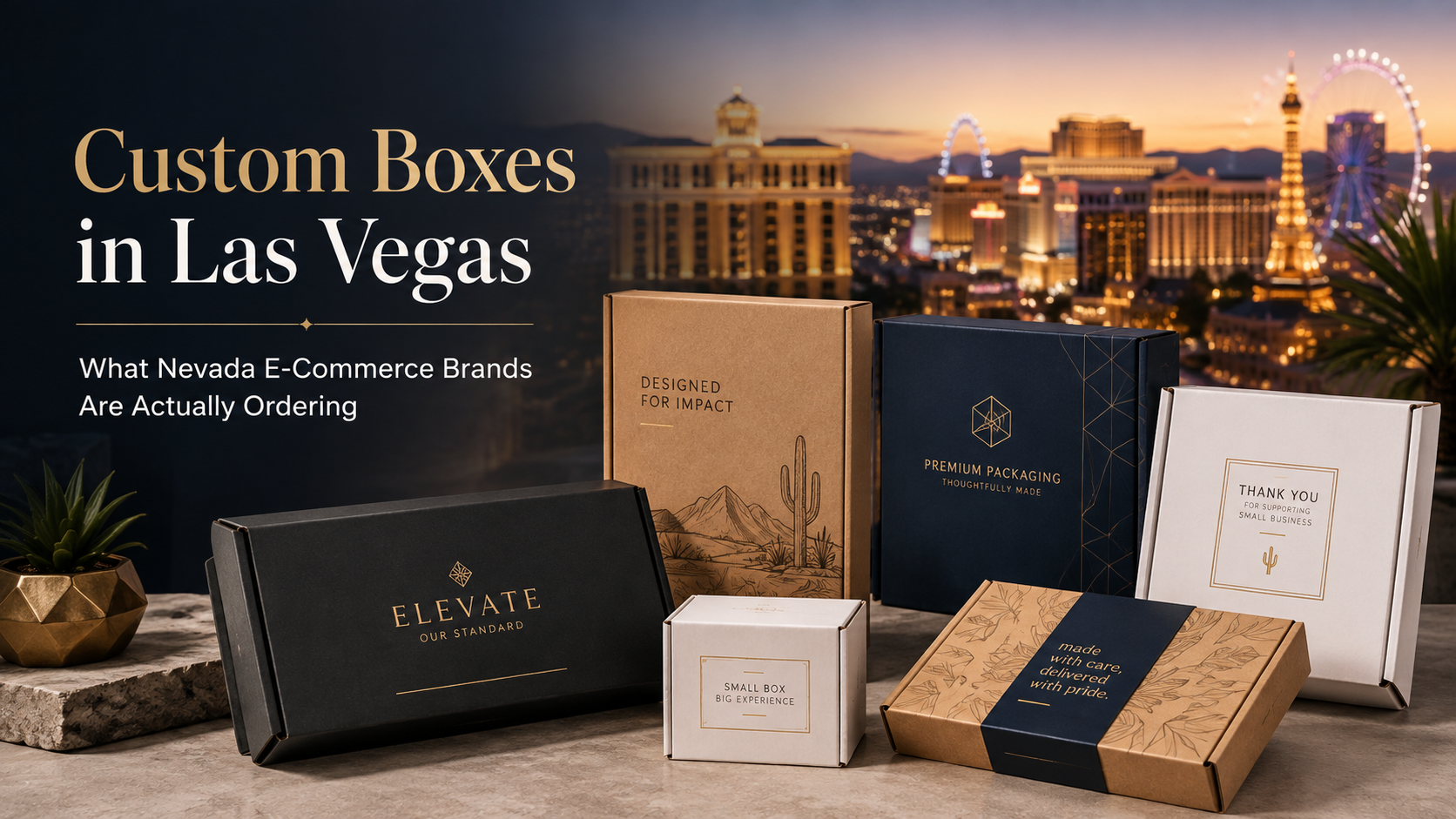
Las Vegas has the most extreme packaging environment of any major US city, and most brands operating here don’t spec for it. Custom boxes Las Vegas Nevada brands ship through summer temperatures that regularly hit 108–115°F — temperatures that fail hot-melt tape adhesives, deform wax-coated products, melt chocolate, and render standard corrugated board structurally compromised before the package reaches a front door. That’s the climate reality. The brand reality is equally specific: Las Vegas runs on tourism, hospitality, entertainment, and an events economy that creates packaging demand unlike any other market in the country. Getting both right is what separates Las Vegas packaging that works from packaging that ends up as a return claim in July.
The city itself is two different markets sitting next to each other. The Strip and resort corridor runs on a global tourism economy where premium presentation, branded merchandise, and experiential packaging matter intensely. Henderson, Summerlin, and the surrounding suburbs are a high-income residential market with a growing tech and professional services sector and DTC ecommerce brands that look like any other western US market — except they ship through 110°F summers. Each market needs different packaging signals. Neither can afford to ignore the heat.
Custom Boxes Las Vegas Nevada: The Desert Heat Problem
No US market stresses packaging the way a Las Vegas summer does. June through September, sustained outdoor temperatures exceed 105°F routinely, with peaks above 115°F during heat events. Delivery vehicles and front porches reach internal temperatures well above ambient air — a parcel sitting in a delivery truck in July can experience temperatures approaching 140°F for hours before delivery.
That environment breaks standard packaging in specific, predictable ways.
Hot-melt tape adhesive failure. Standard hot-melt pressure-sensitive tape — the kind used to seal RSC corrugated shippers — loses bonding strength above 120°F and approaches failure above 140°F. A package sealed with standard tape in Las Vegas summer transit can arrive with open flaps. The fix is the same as for freeze-thaw markets: self-locking corrugated construction eliminates tape dependency entirely. Tuck-top mailer boxes, auto-lock bottoms — they hold at any temperature without adhesive. For Las Vegas, this is the single most important structural decision in packaging spec.
Wax coating deformation. Candles, wax-sealed packaging, and products with wax-based coatings deform or melt in sustained heat above 100°F. Nevada candle brands shipping DTC through summer need either insulated corrugated liners for their shippers, or explicit seasonal instructions to customers about leaving packages in shade. Wax-based sticker seals can fuse to packaging in transit heat, tearing the box surface when the customer removes them. If you’re using wax as a packaging material in Las Vegas summer, you need to either protect it thermally or switch to a heat-stable alternative for June–September.
Corrugated board strength in dry heat. Unlike humid markets where moisture degrades corrugated ECT stacking strength, Las Vegas has the opposite problem: extreme dry heat accelerates moisture loss from corrugated fibers, making the board brittle rather than limp. Brittle corrugated is more prone to puncture and corner crush damage than humid-climate corrugated failure. For heavy products shipped in stacked configurations, this is a real failure mode. Moisture-balanced board or double-wall corrugated for heavy products is the correct spec for Las Vegas summer fulfillment.
Temperature-sensitive products. Chocolate, certain cosmetics (lip balm, wax-based skincare), supplements with heat-degradation thresholds, and electronics with thermal management requirements all need active thermal protection for Las Vegas summer shipping. Reflective bubble liner inserts inside corrugated shippers provide meaningful temperature buffering — they don’t refrigerate, but they can reduce interior temperature by 15–25°F relative to an unlined shipper in the same ambient conditions. For genuinely temperature-sensitive products, gel packs paired with insulated liners are necessary from June through September.
The packaging mistakes that generate the most damage claims in desert markets are always climate spec failures — tape closures, inadequate board weight for heat-brittle conditions, and thermal protection gaps for sensitive products. Fix the spec before summer, not after the first wave of July returns.
The Strip Economy: What Tourism and Hospitality Packaging Looks Like
Las Vegas’s hospitality and tourism industry creates packaging demand that’s unique in the country. Casino resorts, entertainment venues, luxury hotels, and the events infrastructure around them all generate branded merchandise and product packaging at scale — and at a premium presentation standard shaped by decades of luxury hospitality experience.
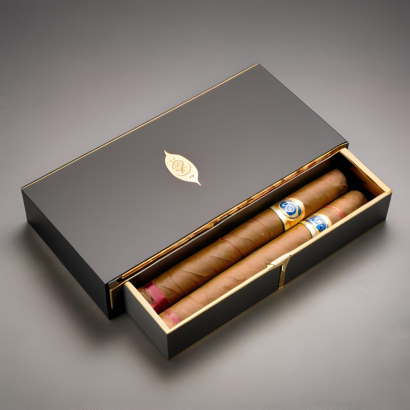
Casino and resort merchandise. Branded merchandise from Las Vegas’s major resort operators — logo apparel, collectibles, gaming accessories, specialty food items — ships both in-resort and DTC to customers who want to extend the Las Vegas experience at home. This merchandise category demands packaging that reflects the resort’s positioning. A premium resort-branded product in a plain brown corrugated shipper creates a brand experience mismatch that the property’s physical presentation never would. Rigid boxes, premium corrugated with foil or emboss elements, soft-touch lamination — these are the packaging standards the resort segment operates at.
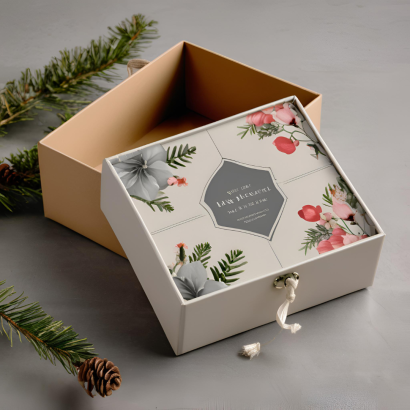
Wedding and event favor packaging. Las Vegas is one of the country’s top wedding destinations. The wedding favor and event gift packaging market here is substantial and year-round, not seasonal. Two-piece rigid gift boxes, custom-printed favor boxes, branded tissue and ribbon — this segment buys at lower per-event volumes but at premium price points and with high design expectations. Local brands serving the wedding market need packaging that photographs well (every Las Vegas wedding is documented extensively) and holds up in the desert event environment.
Entertainment merchandise. Residency merchandise, show memorabilia, sports merchandise from the Vegas Golden Knights, Raiders, and Aces — this entertainment merchandise segment has its own packaging requirements. Collectible items and autographed merchandise need rigid protection and premium presentation. Fast-moving fan merchandise needs packaging that’s cost-effective at volume while maintaining enough brand presence to reinforce the entertainment property.
Specialty food DTC. Las Vegas’s restaurant and food brand scene has expanded substantially, with chefs and specialty food producers shipping DTC nationally. For these brands, heat-safe corrugated with food-safe board is the starting point — but Las Vegas summer adds thermal management requirements that food brands in cooler markets don’t face. Chocolate-covered products, specialty confections, and temperature-sensitive food items require insulated packaging for summer shipment from Las Vegas, even for overnight delivery where the last-mile heat exposure is the critical window.
Custom Boxes Las Vegas Nevada: Henderson, Summerlin, and the Suburban DTC Market
Beyond the Strip, Las Vegas’s high-income suburban markets — Henderson, Summerlin, Green Valley — represent a DTC ecommerce buyer profile that looks very different from tourist merchandise buyers. This is where Nevada’s growing tech sector, medical professionals, finance workers, and established families shop, and the packaging expectations here are closer to a premium western US suburban market than to hospitality brand standards.
Understanding how packaging drives repeat purchases is directly relevant in this market. Henderson and Summerlin consumers have high disposable income and strong brand loyalty in the right categories — beauty, wellness, premium food, home goods, lifestyle. The unboxing experience matters for repeat purchase behavior in exactly the ways it does in comparable suburbs in Phoenix, Denver, or Seattle. The difference is the summer climate — the packaging spec has to handle the desert heat that these consumers experience when their orders arrive at a house that’s been closed up in 108°F ambient air all day.
Self-locking construction is table stakes in summer. A tuck-top mailer box that holds without tape is not a premium feature in Las Vegas — it’s the minimum viable summer spec. For the suburban DTC market, get the climate spec right first, then focus on premium finish choices for the brand experience layer on top of it.
Interior print performs well in this market. The custom mailer box with a branded interior lid generates unboxing content from Henderson and Summerlin consumers at rates comparable to premium West Coast markets. These buyers are active on social media, value brand presentation, and will photograph and share an unboxing that’s worth filming. A printed interior creates that moment at an incremental cost of $0.15–$0.20 per unit — a better Las Vegas DTC investment than a premium exterior finish alone.
Downtown Las Vegas and the 18b Arts District
Downtown Las Vegas — particularly the 18b Las Vegas Arts District and the Fremont East corridor — hosts an independent brand and creative economy that skews younger, more sustainability-conscious, and more aligned with craft aesthetics than the Strip economy. Artisan food, independent jewelry, art, and handmade goods brands operate here, and their packaging expectations are closer to a craft-forward maker market than resort merchandise standards.
For Downtown Las Vegas brands: kraft corrugated with recycled content, FSC certification noted on packaging, and the intentional-craft aesthetic that signals authenticity over luxury. Matte lamination reads as more appropriate than gloss here. A printed interior with a local reference — a Las Vegas neighborhood, a craft story — resonates with buyers who specifically chose the independent brand over the resort gift shop. I’ve watched Downtown Las Vegas food and craft brands build strong repeat buyer bases on this positioning, and the packaging is where that positioning becomes physical for the customer.
Nevada’s Logistics Position
Las Vegas sits on I-15, which connects directly to Los Angeles (4 hours southwest) and Salt Lake City (4.5 hours north). I-93 runs southeast to Phoenix (4.5 hours). Harry Reid International Airport handles substantial cargo volume. For Las Vegas DTC brands, this position enables 1-day ground delivery to the Los Angeles metro, the Southwest corridor, and the Mountain West from a single Nevada fulfillment point.
The proximity to Los Angeles matters for packaging standard comparisons. Las Vegas brands shipping to SoCal compete directly with LA-based DTC brands for Southern California consumers. LA’s unboxing culture and packaging expectations are high — Las Vegas brands shipping to that market need packaging that holds up at that comparison point. Getting the spec right for Las Vegas summer also means getting it right for LA delivery, since the desert transit corridor between the two cities in summer is one of the hottest freight routes in the country.
Getting the Spec Right for Las Vegas
Across Las Vegas’s different brand ecosystems, these are the decisions that separate packaging that works from packaging that generates summer returns.
Self-locking construction, always. Tuck-top mailer boxes and auto-lock bottoms eliminate tape dependency. This is not optional in Las Vegas summer. It’s the baseline spec for any corrugated packaging that ships June through September.
Thermal protection for heat-sensitive products. Reflective bubble liner inserts for heat-sensitive products. Gel packs for genuinely temperature-sensitive goods. Explicit handling instructions on the exterior for items that must not be left in direct sun. Las Vegas’s last-mile thermal exposure is unlike any other major US market.
Double-wall or heavy single-wall for weight. Las Vegas dry heat makes corrugated brittle in summer. Heavy products benefit from double-wall construction that handles corner crush and puncture damage better than standard single-wall in heat-brittle conditions.
Premium finish matched to market segment. Strip and resort: soft-touch lamination, rigid box for high-value items. Henderson and Summerlin DTC: matte lamination baseline, interior print for brand experience. Downtown and 18b: kraft, recycled content, FSC-certified board, minimal-print craft aesthetic.
Food-safe board for Nevada’s food brands. Las Vegas’s food DTC segment requires food-safe board stock for corrugated contacting consumables. Specify FSC-certified food-safe board explicitly — it’s not the default corrugated spec.
FAQ: Custom Boxes in Las Vegas, Nevada
How does Las Vegas summer heat affect packaging?
Severely. Sustained temperatures above 105°F from June through September fail hot-melt tape adhesives, deform wax-based packaging elements, make corrugated board brittle through moisture loss, and damage heat-sensitive products during last-mile delivery. The fixes are structural: self-locking construction eliminates tape dependency, double-wall corrugated handles brittle-condition crush damage, and insulated liners protect temperature-sensitive goods in transit.
What’s the minimum order for custom boxes in Las Vegas?
Digital printing: 50–100 units, no plate setup costs. Offset: 500–1,000+ units. Rigid boxes: 100–250 units minimum. Domestic suppliers deliver to Las Vegas in 3–5 weeks for digital runs. Given extreme summer conditions, ordering before peak summer (April–May) allows time to build in the right climate spec before June shipping begins.
What packaging handles the Las Vegas tourism and resort market?
Resort merchandise requires presentation-tier packaging: soft-touch or matte lamination on corrugated, rigid two-piece boxes for high-value items, foil or emboss elements for premium branding, and interior print for the unboxing moment. The structural spec (self-locking, thermally appropriate) applies regardless of the presentation tier. Summer shipment of wax-coated or heat-sensitive resort products needs insulated packaging support.
How does Las Vegas packaging compare to Phoenix?
Similar desert challenges — extreme summer heat, tape failure, heat-sensitive product damage. Phoenix adds monsoon-season humidity (July–September) that creates moisture-degradation risk on top of heat. Las Vegas runs drier, creating brittleness rather than limpness in summer corrugated. The fixes overlap: self-locking construction, thermal protection, double-wall for heavy products. The Phoenix packaging guide covers the comparable desert spec context for the Southwest corridor.
What packaging works for Las Vegas wedding favor orders?
Two-piece rigid gift boxes for premium presentation. Custom-printed kraft favor boxes for higher-volume event quantities. For outdoor summer events: replace wax seals with heat-stable sticker seals and eliminate wax-coated packaging elements. A wedding favor that arrives melted or with fused seals is a brand disaster — spec for the summer outdoor event environment specifically if that’s your market.
Can Las Vegas brands ship temperature-sensitive products in summer?
Yes, with the right thermal packaging. Reflective insulated corrugated liners reduce interior temperature by 15–25°F. Gel packs extend protection windows. For genuinely temperature-sensitive products — chocolate, certain skincare, food items — overnight shipping with ice packs is the only reliable option in Las Vegas summer, and the box needs to accommodate the gel pack volume without oversizing the shipment tier.
What finish signals work for Henderson and Summerlin DTC consumers?
Matte lamination is the baseline for premium positioning. It reads more sophisticated than gloss and performs better with Henderson and Summerlin’s professional services and tech demographic. Interior print — a branded color field or message inside the lid — generates social sharing in this market. Soft-touch lamination is appropriate for products priced $75+. Gloss works for cost-sensitive categories but signals less premium in this specific suburban demographic context.
Las Vegas Ships Through the Hardest Summer in the Country. Spec for It.
The brands getting custom boxes Las Vegas Nevada right aren’t just picking a box — they’re solving a climate engineering problem first and a brand presentation problem second. Self-locking construction for tape that fails at 140°F. Thermal protection for products that melt at 110°F ambient. The right finish for a market that ranges from global hospitality luxury to craft-forward independent brands in the 18b Arts District.
Get the summer spec right and the packaging works year-round. Skip it and the first hot July teaches you the lesson expensively.
Easy Box Packaging works with Nevada brands across the full range — resort merchandise, Henderson DTC operations, Downtown Las Vegas independent brands, and food producers navigating summer thermal challenges. See our ecommerce packaging options to talk through what your Las Vegas operation specifically needs. For the closest western US climate parallel, the Denver packaging guide covers another high-altitude western market with its own seasonal extremes and premium DTC consumer base.