
Colorado has a packaging problem that nobody outside Colorado talks about. It’s not the altitude, exactly — though altitude does matter for some product types. It’s the combination of things: the freeze-thaw cycles that degrade adhesives, the sustainability-conscious consumer base that actually reads what’s on your box, the geographic spread from Denver to Boulder to Fort Collins that means your packages travel through mountain passes and sit on unheated porches through February.
Brands that figure this out ship better boxes and get fewer complaints. Brands that order the same spec they’d use in Phoenix or Dallas end up learning the hard way, usually in January.
Here’s what Colorado ecommerce brands are actually ordering for custom boxes, what’s working, and what the Denver market specifically rewards in packaging that brands in other states don’t always need to care about.
The Colorado Climate Problem Most Packaging Guides Skip
Denver gets 300 days of sunshine per year and temperature swings that can hit 60°F in a single day. That combination is unusual — and it creates a specific set of packaging stresses that brands shipping from Denver should understand before they spec their corrugated.
The freeze-thaw adhesive problem. Standard pressure-sensitive tape adhesive — the tape that seals most RSC (regular slotted container) shippers — starts losing bonding strength at temperatures below 40°F and essentially fails below 20°F. Denver regularly hits below-zero temperatures in January and February. Packages sitting on a front porch in Denver in midwinter may go through three or four freeze-thaw cycles before someone picks them up. Every cycle degrades the adhesive a little more.
The practical fix: self-locking corrugated construction — auto-lock bottoms, tuck-top mailer boxes, or fully glued shippers — eliminates tape reliance entirely. For brands shipping heavy or high-value products, applying two runs of cold-weather tape (acrylic-based rather than hot melt) adds meaningful security at minimal cost.
The altitude and sealed packaging issue. Corrugated boxes themselves aren’t meaningfully affected by altitude changes. But if your product ships inside a sealed flexible package — a kraft stand-up pouch, a sealed bag, a vacuum-sealed item — altitude creates a pressure differential problem. A pouch sealed at sea level and then transported to a 10,000-foot elevation during mountain delivery will puff visibly, stressing the seals. Denver sits at 5,280 feet; many Colorado deliveries go significantly higher.
For food, supplement, and personal care brands shipping into mountain communities from Denver, this means either: (a) accounting for the differential in your seal specs, or (b) ensuring your corrugated outer packaging can absorb some pressure without failing. A well-specced corrugated shipper is your buffer against altitude-related damage complaints from mountain destination orders.
The UV and exterior print problem. Colorado gets more UV radiation than almost any state, sitting at elevation with over 300 sunny days per year. Brands selling at outdoor markets or pop-up retail — which is common in Denver’s RINO district, Boulder’s Pearl Street, Fort Collins’ Old Town — will see exterior print fade faster than they would in comparable coastal markets. Matte or gloss lamination is not optional for outdoor retail applications in Colorado; it’s the difference between packaging that looks sharp at the end of a market season and packaging that looks washed out after the first month.
What Denver DTC Brands Are Actually Ordering
Denver’s ecommerce scene has grown alongside the city itself. Outdoor gear brands, activewear companies, natural food and supplement brands, craft beverage producers — they all ship from Denver and its surrounding communities, and their packaging needs overlap in specific ways.
The dominant box style for Denver DTC fulfillment is the custom mailer box. Self-locking construction, no tape dependency, good stacking efficiency in warehouse storage, clean unboxing experience for the customer. Most Denver DTC operations run one or two mailer box sizes for core SKUs and add a corrugated shipper for heavier or fragile items.
What’s different about Denver compared to coastal DTC markets:
Sustainability is not optional branding here — it’s expected. Colorado ranks consistently among the top states for consumer sustainability preference. Brands shipping from Denver that use recycled content corrugated, FSC-certified board, or soy-based inks aren’t doing it purely for marketing — they’re meeting a real expectation from their customer base. A Denver consumer who opens a box and sees unnecessary plastic dunnage or non-recyclable coatings will notice it in a way that a customer in a less sustainability-conscious market might not.
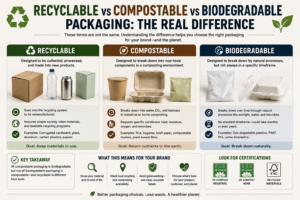
This doesn’t mean your packaging needs to be spartan or sacrifice brand quality. Recycled content corrugated prints well. FSC-certified SBS board takes lamination and foil cleanly. Eco-friendly packaging choices and high-quality packaging are not mutually exclusive. Understanding what eco-friendly custom packaging actually costs is the starting point for making that decision clearly rather than by assumption.
The outdoor gear packaging challenge. Denver is one of the largest outdoor gear retail markets in the country, and a number of direct-to-consumer outdoor brands ship from the Front Range. Outdoor gear has specific corrugated requirements: products are heavy (weight-rated board), often irregularly shaped (custom die-cut inserts or kraft paper fill), and the consumer base is particularly attentive to packaging waste. Double-wall corrugated for anything over 10 lbs; die-cut foam or molded pulp inserts for fragile technical equipment; and minimal excess void fill — because outdoor consumers are the most likely demographic to think about where their packaging goes after delivery.
Boulder: Small Runs, Big Brand Expectations
Boulder runs on startups. Forty minutes from Denver, it has one of the highest concentrations of natural food, supplement, wellness, and outdoor brands in the country — and most of them are ordering 200–500 units at a time, not 5,000.
At those volumes, offset printing isn’t the right call. Digital printing — no plates, no setup costs, fast turnaround — is what makes sense for Boulder-stage brands. The per-unit cost is higher than offset, but the ability to change artwork quickly, test different box formats, and avoid carrying six months of inventory is worth the premium at this stage.
The specific issue for Boulder brands: they often have very high brand design standards — because Boulder’s consumer base is design-literate and expects brands that look considered — but they’re working with small-run budgets that push back against the finishes that make packaging feel premium. The solution most Boulder brands land on: a well-printed digital run with a single finish (matte lamination is most common) that gives a quality feel without the minimum order requirements of specialty finishes like soft-touch or foil at offset runs. The per-unit cost is higher, but the flexibility to change artwork and keep inventory lean is worth that premium at early stage.
Fort Collins and Northern Colorado: Craft Beverage Packaging
Fort Collins is one of the most beer-dense cities per capita in the United States. Home to New Belgium, Odell Brewing, Snowpack Taproom, and dozens of smaller craft producers, the Northern Colorado craft beverage scene has specific packaging requirements that differ from standard ecommerce corrugated.
For craft beverage brands shipping direct:
Food-safe board is non-negotiable. Secondary packaging for consumable products — the corrugated shipper around your 6-packs or gift sets — requires food-safe board stock. FSC-certified kraft or SBS with food-safe coatings is the standard. This also affects Amazon FBA eligibility for brands selling through that channel.
Weight ratings matter. A case of twelve 12oz bottles weighs over 10 lbs before any additional packaging materials. Standard single-wall corrugated isn’t rated for the compression load that generates in stacked pallets. Corrugated shippers for bottled products typically need ECT-32 or better, and many craft beverage brands run double-wall for anything that’s going to be stacked on a pallet during distribution.
Interior protection is the job. The corrugated shell is the marketing layer. The interior partition or insert is what keeps product from breaking. Chipboard partitions, corrugated cell packs, and molded pulp inserts are the standard approaches for bottled product shipping. Getting this wrong means breakage claims, customer service costs, and carrier damage reimbursement filings — all of which cost more than the insert would have.
Colorado Springs and the Military Shipping Reality
Colorado Springs has a significant military presence — Fort Carson, Peterson Space Force Base, the Air Force Academy — which translates into a customer base that values straightforward, durable packaging over decorative experience. Brands shipping to Colorado Springs customers frequently, especially for gear or supplement categories, should know that durability signals translate better than unboxing theatrics for this segment.
Double-wall corrugated, clean construction, functional protection — the packaging equivalent of understated competence. It still needs to look considered, but the priority hierarchy is different from, say, a Boulder wellness brand targeting lifestyle consumers on Instagram. I’d rather see a Colorado Springs brand spend that extra $0.15/unit on heavier board than on a foil stamp that’s going to get scratched in shipping anyway.
Getting the Spec Right for Colorado Shipping
Across the Denver metro and Colorado broadly, these are the spec decisions that matter most:
Self-locking construction over tape closures. Freeze-thaw cycles destroy standard tape adhesive. Auto-lock bottoms and tuck-top mailer designs eliminate that dependency entirely. For anything going to Colorado addresses between October and March, this matters.
Recycled content corrugated where possible. Colorado consumers notice. More importantly, recycled content corrugated from domestic mills often has lead times and costs that are competitive with virgin corrugated, so there’s rarely a meaningful trade-off at scale.
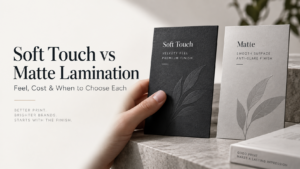
Lamination for any outdoor retail application. If your product appears at Denver farmer’s markets, outdoor festivals (Colorado has hundreds), or any exterior display, laminated print extends color life through UV exposure significantly. Matte lamination is the baseline; gloss lamination adds UV protection and surface durability; soft-touch adds tactile quality for premium positioning.
Board weight calibrated for actual product weight. Colorado brands, especially in outdoor gear and beverage, tend to ship heavier products than the national average. Single-wall 32 ECT is fine up to about 40 lbs for most corrugated configurations, but check your actual product weight plus any void fill against the board grade spec before assuming single-wall is sufficient.
Understanding the packaging mistakes that derail the unboxing experience is the foundation — and in Colorado’s climate, the structural ones are more consequential than in more forgiving markets.
Why Colorado Brands Invest in Packaging More Than You’d Expect
I’ve talked to a lot of Colorado brand founders about packaging. The ones who figure out the climate spec early — who understand why their tape is failing in January and why their print looks washed out by June — are the ones who stop fighting the logistics and start using the packaging as a brand signal instead. The ones who don’t figure it out are still troubleshooting damage complaints.
The counterintuitive thing about Colorado packaging: brands here tend to spend more on packaging as a percentage of product cost than equivalent brands in other markets. The sustainability requirement drives some of that. The design expectations of the consumer base drive more of it. But the biggest driver is repeat purchase.
Colorado’s outdoor and wellness consumer base is highly loyal once they find brands they trust. The unboxing experience is part of the trust signal — a brand that packages well signals that it cares about the product and the customer in a way that generic brown box packaging doesn’t. Understanding how packaging drives repeat purchases matters for any DTC brand, but it’s especially true in a market where brand loyalty is high and word of mouth is strong.
The math: if a well-packaged order costs $1.20 more than a generic box but produces a 15% higher repeat purchase rate among Colorado’s high-lifetime-value outdoor and wellness consumers, the $1.20 isn’t a cost — it’s one of the better marketing investments in the budget.
FAQ: Custom Boxes in Denver, Colorado
Do I need a local supplier to get custom boxes in Denver?
No. Most Denver-area brands order from national or international suppliers and have inventory shipped to their fulfillment location. What matters for Colorado brands is the spec — cold-weather construction, appropriate board weight, sustainability certifications — not the supplier’s ZIP code. Lead times from domestic suppliers to Denver typically run 3–5 weeks for standard corrugated runs.
What box construction handles Colorado winters best?
Self-locking construction — auto-lock bottoms, tuck-top mailer boxes — removes tape from the equation, which is the right call for anything shipping to Colorado addresses between October and April. Tape adhesive fails at low temperatures. Self-locking corrugated doesn’t.
What’s the minimum order for custom packaging in Denver?
With digital printing, 50–100 units is achievable with many suppliers at no setup cost. That’s the practical range for Boulder-stage startups testing formats. Offset printing starts making economic sense at 500–1,000+ units when per-unit cost matters more than flexibility. The right threshold depends on your order volume and how stable your design is.
Does altitude affect corrugated box performance?
For corrugated boxes themselves, no — corrugated is not pressurized. For sealed flexible packaging inside corrugated shippers, yes. Products sealed at sea level and delivered to high-altitude Colorado addresses experience pressure differentials that can stress seals and cause puffing. Brands shipping sealed pouches or bags should account for this in their seal specs.
What sustainability certifications do Colorado consumers care about?
FSC certification (Forest Stewardship Council) is the most recognized. Recycled content labeling — showing percentage of post-consumer recycled material — is also noticed. Colorado consumers are more likely than the national average to make purchasing decisions based on packaging sustainability signals, particularly in the outdoor, wellness, and natural food categories.
What print finish is best for outdoor retail in Denver?
Matte or gloss lamination for anything displayed outdoors. Colorado’s elevation and 300+ sunny days per year accelerate UV fading on unlaminated print. Matte lamination is the practical baseline; gloss lamination provides additional UV protection plus surface durability. For premium positioning, soft-touch matte lamination adds tactile quality and holds up well in outdoor retail environments.
Is kraft packaging the right choice for Colorado brands?
Often yes, especially for brands in natural food, outdoor, wellness, or sustainability-focused categories. Kraft corrugated reads as intentional and eco-conscious — which plays to Colorado consumer preferences — and it hides surface wear better than white SBS in transit. White SBS with lamination is better for brand-forward packaging where color accuracy matters. The right choice depends on whether your brand skews natural/earthy or polished/premium.
Colorado Ships Differently — Your Boxes Should Too
The brands getting it right in Denver aren’t the ones with the biggest packaging budgets. They’re the ones that thought about what Colorado specifically means for their boxes — what the climate does to adhesives in winter, what the consumer base expects on sustainability, what the altitude does to sealed products heading into the mountains, what the outdoor market circuit does to exterior print over a season.
That’s not a lot to figure out. But it’s specific to where you are, and generic packaging advice written for a median US market doesn’t cover it.
Easy Box Packaging works with DTC brands across Colorado — from Denver fulfillment operations to Boulder supplement startups to Fort Collins craft beverage brands figuring out their direct-to-consumer packaging setup. See our ecommerce packaging options to talk through what your products and your market actually need.
Also worth reading if you’re a western US brand thinking about regional climate and packaging: the Phoenix packaging guide covers Arizona’s dual climate problem (extreme dry heat plus monsoon humidity) that hits corrugated in ways similar to Colorado’s winter stress. And if you’re shipping to Midwest distribution hubs from Denver, the Ohio packaging guide covers what brands distributing from Columbus and Cleveland need to know about corrugated spec in that market.