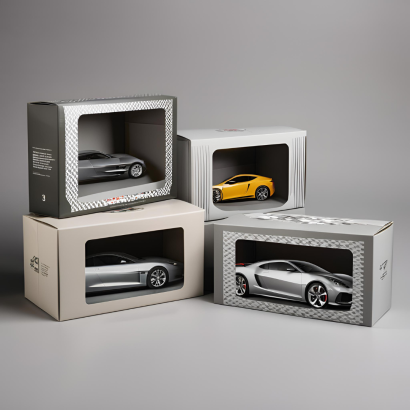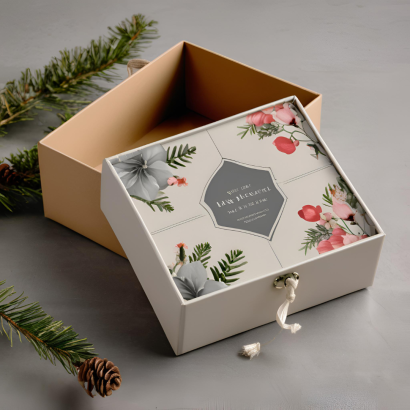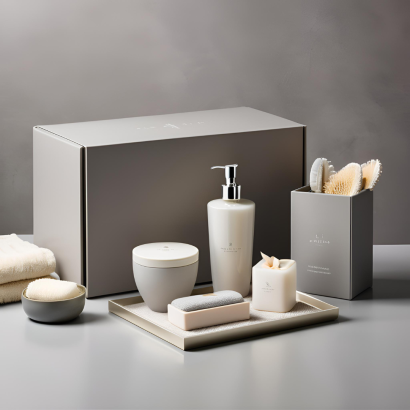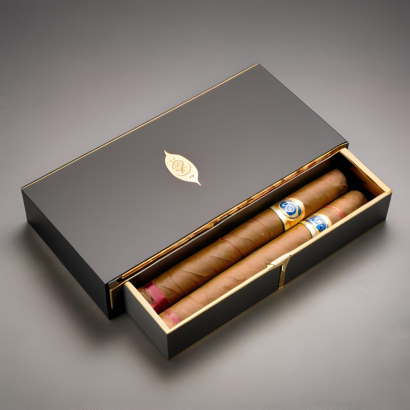

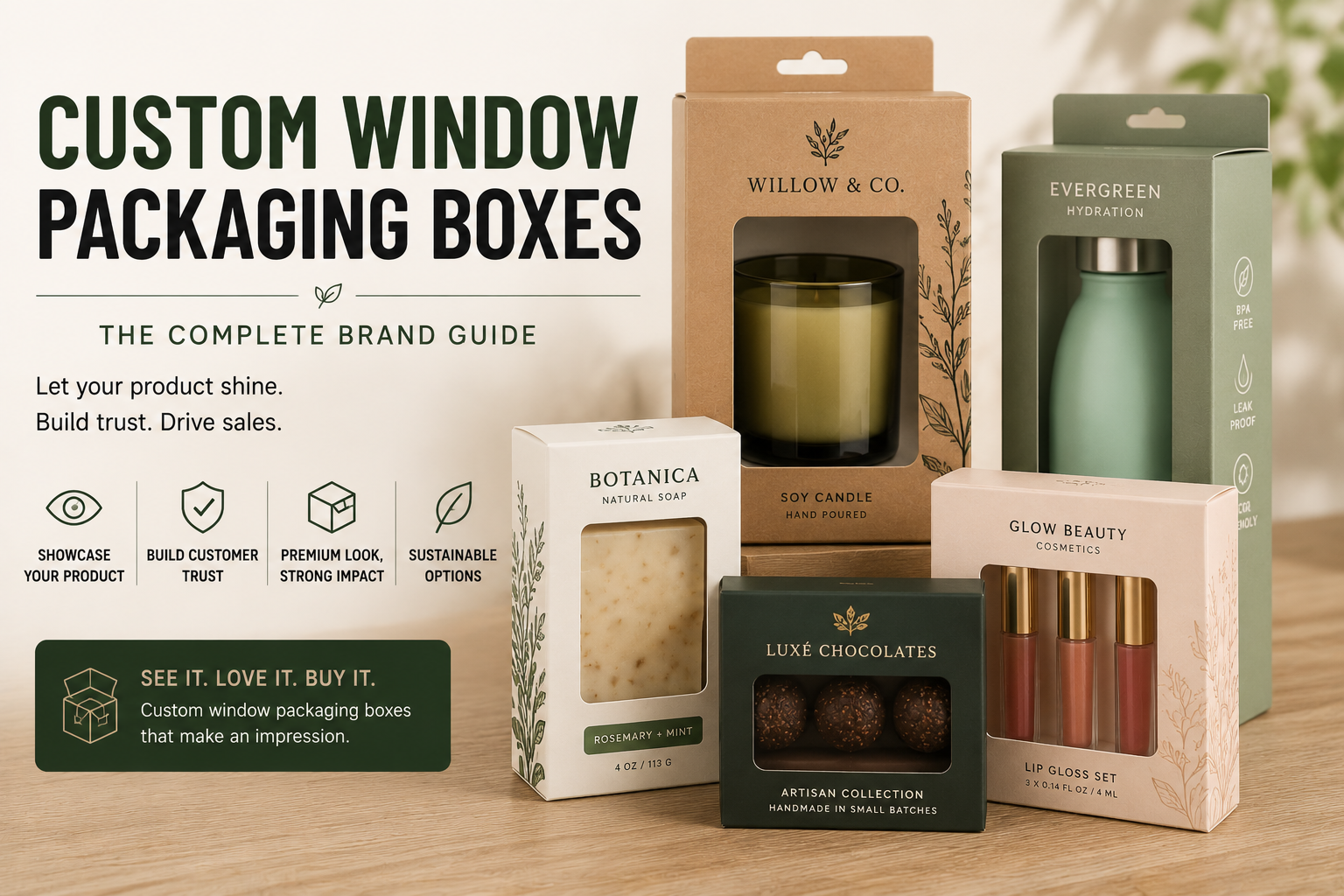
A customer in front of a shelf has two or three seconds to decide. That’s not enough time to read your copy. But it is enough time to see your product. That’s the whole argument for custom window packaging boxes: the window removes the guesswork.
The case isn’t complicated. But the execution is. Window patching adds cost and complexity. Not every product benefits. Some formats look premium with a window. Others look cheaper. This guide covers what custom window packaging boxes actually are, when to use them, and what to nail down before briefing a supplier.
What Custom Window Packaging Boxes Actually Are
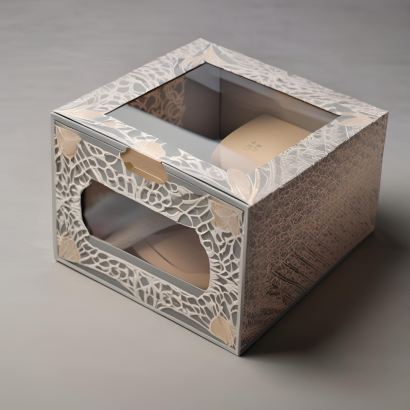
A window box is any folding carton, rigid box, or corrugated structure with an opening in the board filled by transparent film. The film is bonded to the die-cut opening using heat and pressure. This process is called window patching.
The board is any standard substrate — SBS (Solid Bleached Sulfate), kraft, CUK, or corrugated. The film is a separate material. Common options are PET, cellulose acetate, and compostable PLA film. Each handles clarity, moisture, and sustainability differently.
The result is a box that ships, stacks, and stores like any solid box. But it lets the customer see the product without opening the package. That visibility changes the shelf decision.
Custom window packaging boxes appear across almost every retail category. You see them on candles (the color visible through the front), on cosmetics (the palette showing through a cutout), on food products (the treat visible before purchase), and on toys (the product visible before the box is opened). The common thread is the same: the product is the best selling argument — better than a photo, better than copy.
How the Window Patching Process Works
Understanding the process helps you spec correctly.
First, the box is die-cut. The cutter creates both the box structure and the window opening in one pass. Window shapes can be almost anything — rectangular, circular, arched, or a custom silhouette. Irregular shapes cost more to die-cut. Rectangular and oval windows are the most efficient.
Second, the film is applied. Rolls of transparent film feed through a patching machine. Heat bonds the film precisely to the die-cut edges. A tight bond prevents delamination during shipping and handling.
Third, the box is finished and assembled. Printing, laminating, and additional finishes happen before or after patching depending on the supplier’s setup.
The key spec decision here: window size. A large window weakens the panel. A window covering more than about 40% of a panel face reduces rigidity. For standard retail folding cartons this is rarely a problem. For heavier products or shipping applications, it matters.
Window Film Options: PET, Acetate, and Compostable
The film material affects clarity, cost, and sustainability. These are the main options.
PET film. The industry standard. High clarity. Excellent stiffness. Resists moisture. For most custom window packaging boxes at standard retail volumes, PET is the right default.
Cellulose acetate. Derived from wood pulp. Biodegradable. Has a softer, slightly warmer clarity than PET. Often used in premium applications — high-end chocolates, perfume, luxury cosmetics. Costs more than PET. Not as moisture-resistant, which limits some food applications.
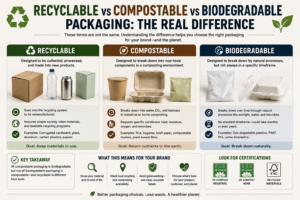
Compostable PLA film. Plant-based. Certified home or industrial compostable depending on grade. Worth specifying if your brand’s sustainability story includes the full packaging footprint. Slightly lower clarity than PET. More expensive. If you’re already using FSC-certified board, compostable film completes a coherent, verifiable sustainability claim. If you’re not sure which certifications actually move the needle, the eco-friendly packaging guide breaks down the real cost differences across materials and what each certification means in practice.
Polypropylene. Lower cost than PET. Less clarity. Common in cost-sensitive food packaging where the window is functional rather than presentational.
The choice comes down to: premium presentation (acetate or compostable PLA), standard retail (PET), or cost-sensitive functional (PP). If unsure, start with PET.
When Custom Window Packaging Boxes Are Worth It
Not every product benefits from a window. Here’s the honest breakdown.
Strong case for window packaging:
- Products where color, texture, or shape is the primary selling point. Candles, soaps, baked goods, cosmetics, jewelry, small accessories. The customer wants to see what they’re buying before committing.
- Categories with high look-alike competition at shelf. If your product looks visually distinctive, a window makes that clear without any copy needed.
- Gift-adjacent products. When someone buys a candle or treat as a gift, the visible product creates instant confidence. It confirms the gift looks as good as hoped.
- Products where opening the box would damage it. Window boxes let the customer evaluate the product without touching it.
Weak case for window packaging:
- Functional products that don’t photograph interestingly. A supplement capsule. A hardware component. A cable. The product isn’t the selling point — the claims on the box are. A window adds cost with no benefit.
- Products with variable appearance between units. Handmade goods with color or texture variation can look inconsistent in a window. That inconsistency undercuts the premium feel.
- Products that degrade with light exposure. Some food products, herbal supplements, and cosmetics are affected by UV or ambient light. A window accelerates this unless UV-blocking film is specified.
- DTC-only products shipping in mailer boxes. For that format, the custom mailer box is the right structure. The window experience lives inside at unboxing, not on the outer box.
Design Rules for Custom Window Packaging Boxes That Work
A window is not automatically a positive. These rules separate window boxes that sell from ones that don’t.
Frame the window intentionally. The window should feel like a deliberate design choice. Centered windows with generous board border look premium. Off-center windows without clear visual logic look like an afterthought.
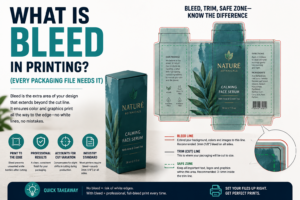
Keep print away from window edges. Text or graphics that run too close to the window look cut off. Leave at least 6–8mm of clean board between printed elements and the window frame.
Consider the interior presentation. What the customer sees through the window matters as much as the window itself. An empty interior cavity, a loose product rattling inside, or a brown interior against a white exterior — all of these undercut the window’s purpose. Tissue paper, inserts, or a colored interior panel transform the experience.
Match window shape to brand personality. Rectangular windows read as clean and modern. Arched or oval windows read as traditional and premium. Die-cut silhouette windows — the product shape cut into the board — are playful and distinctive. Match the window to the brand, not just the product.
Don’t over-window. Multi-panel windows or very large openings make the box feel structurally weak. One well-placed window is almost always more effective than two competing ones.
Ignoring interior presentation is one of the packaging mistakes that cost brands the most at both retail and DTC scale. The window invites the customer to look. What they see inside either closes the sale or kills it.
Industries That Use Custom Window Packaging Boxes Best
Food and confectionery. The category most associated with window boxes. Cookies, chocolates, teas, and specialty food all rely on visible product as a purchase trigger. Rule: make sure the product looks as good through film as it does in photography. Test with real samples before a production run.
Beauty and cosmetics. Eye shadow palettes, lip kits, skincare sets. The color story is visible before the box is opened. Window boxes in this category often combine PET film with a premium interior — foil inserts, tissue, or a molded inner tray. Our healthcare and beauty packaging options include window-compatible formats.
Candles. The candle’s color, texture, and wick are all visible without opening. For candle brands, a window box also serves as secondary containment. The candle is protected in transit but presented visually on the shelf.
Gifts and accessories. Jewelry, small accessories, gift items. The visible product confirms quality before purchase. Research on how packaging influences repeat purchase behavior consistently shows that the first impression at point of sale shapes the entire customer relationship.
Toys and collectibles. Children and parents want to see the product. A well-placed window lets the customer interact with the product’s surface without breaking the seal.
Browse our custom window packaging boxes for configurations across these categories.
Five Specs to Confirm Before Ordering Custom Window Packaging Boxes
1. Board substrate. SBS for bright full-color retail. Kraft or CUK for a natural aesthetic. Corrugated if the box also serves as a shipping structure.
2. Window shape and size. Simple shapes cost less. Custom silhouettes cost more. Keep windows under 40% of total panel area for structural integrity.
3. Film material. PET for standard retail. Acetate or compostable PLA for premium or sustainability-focused applications.
4. Interior finish. What does the customer see through the window? Specify interior color, lining, or insert if presentation matters.
5. Product compatibility. Does your product react to light or moisture? If yes, confirm film spec with your supplier before committing to a run.
Pricing and MOQs vary by specification. Request a custom quote for accurate details.
FAQ
What is a custom window packaging box?
A window packaging box is any box — folding carton, rigid box, or corrugated — with a die-cut opening covered by transparent film. The film is heat-bonded to the board. It lets the customer see the product inside without opening the package.
What film is used in window boxes?
The most common is PET (polyethylene terephthalate). It offers high clarity, stiffness, and moisture resistance. Cellulose acetate is used for premium and biodegradable applications. Compostable PLA film suits sustainability-focused brands. Polypropylene is used in lower-cost functional packaging.
Are custom window packaging boxes more expensive?
Yes. The window patching process adds cost. Film material, the patching step, and precision die-cutting all increase per-unit price. At typical retail volumes, the premium is modest. At very low MOQs it can be significant. Get a quote with and without the window for a direct comparison.
Can window boxes be eco-friendly?
Yes, with the right spec. Choose FSC-certified board. Specify compostable cellulose acetate or PLA film instead of PET. Avoid mixed-material laminations that prevent recycling. A well-specified window box can carry a credible sustainability story — but it requires specifying each component deliberately.
What products should not use window boxes?
Functional products where appearance isn’t the selling point. Products with UV or light sensitivity. Anything with highly variable appearance between units. DTC-only products shipping in outer mailers — where the window adds cost and damage risk without visual benefit.
How large can the window be?
There’s no hard limit. Windows covering more than about 40% of a panel face start to reduce structural rigidity. For retail folding carton applications, most windows run 20–35% of the panel. For display-only formats without stacking requirements, larger windows are feasible.
Custom window packaging boxes work when the product is the argument. If showing it creates confidence and drives the purchase, the window earns its cost. If the product doesn’t look better through film than it does in a photograph — or if the interior presentation isn’t considered — the window adds cost without adding value. Order samples with your actual product inside before committing to a production run. The window experience lives or dies on what’s behind the film, and you can’t evaluate that from a digital mockup.