
Pick up a well-made rigid box. Close the lid slowly. That slight resistance as it seats — the weight settling, the lid finding its position — is doing more work than any foil stamp on the front panel.
That’s the thing most brands miss about luxury rigid box packaging. They focus on the finish. The gold foil. The embossed logo. Those things matter. But the signals that actually trigger a “this is premium” response in buyers are largely tactile. Weight. Closure resistance. The feel of the paper under a finger. Print quality is the last thing a buyer processes — not the first.
This guide covers how luxury rigid box packaging actually works, what the construction decisions mean, and when the premium is worth it.
How Luxury Rigid Boxes Are Actually Built
Understanding the construction explains why rigid boxes feel the way they do — and why you can’t fake that feeling with cheaper materials.
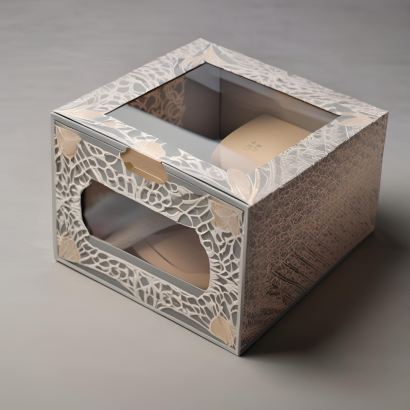
A rigid box is built from greyboard. This is dense chipboard, typically 2–3mm thick. It doesn’t fold. It’s cut and assembled in a fixed shape. The greyboard panels are wrapped in specialty paper — textured, coated, or cloth — using an adhesive lamination process. The result is a rigid, permanent structure.
This is fundamentally different from a folding carton. A folding carton is creased and folded from a single piece of printed board. It collapses flat for shipping. A rigid box cannot collapse. It ships as a finished structure, which means higher per-unit freight cost in addition to higher production cost.
The greyboard is what creates the weight. And weight, in consumer psychology, correlates directly with perceived quality. Before anyone sees the print, before they read the brand name, they’ve already made a judgment based on how the box feels in their hands.
That judgment happens in under two seconds. The construction is doing that work.
The Hierarchy of Premium Signals in Luxury Rigid Box Packaging
Not all luxury signals are equal. These are the decisions that matter most — in order.
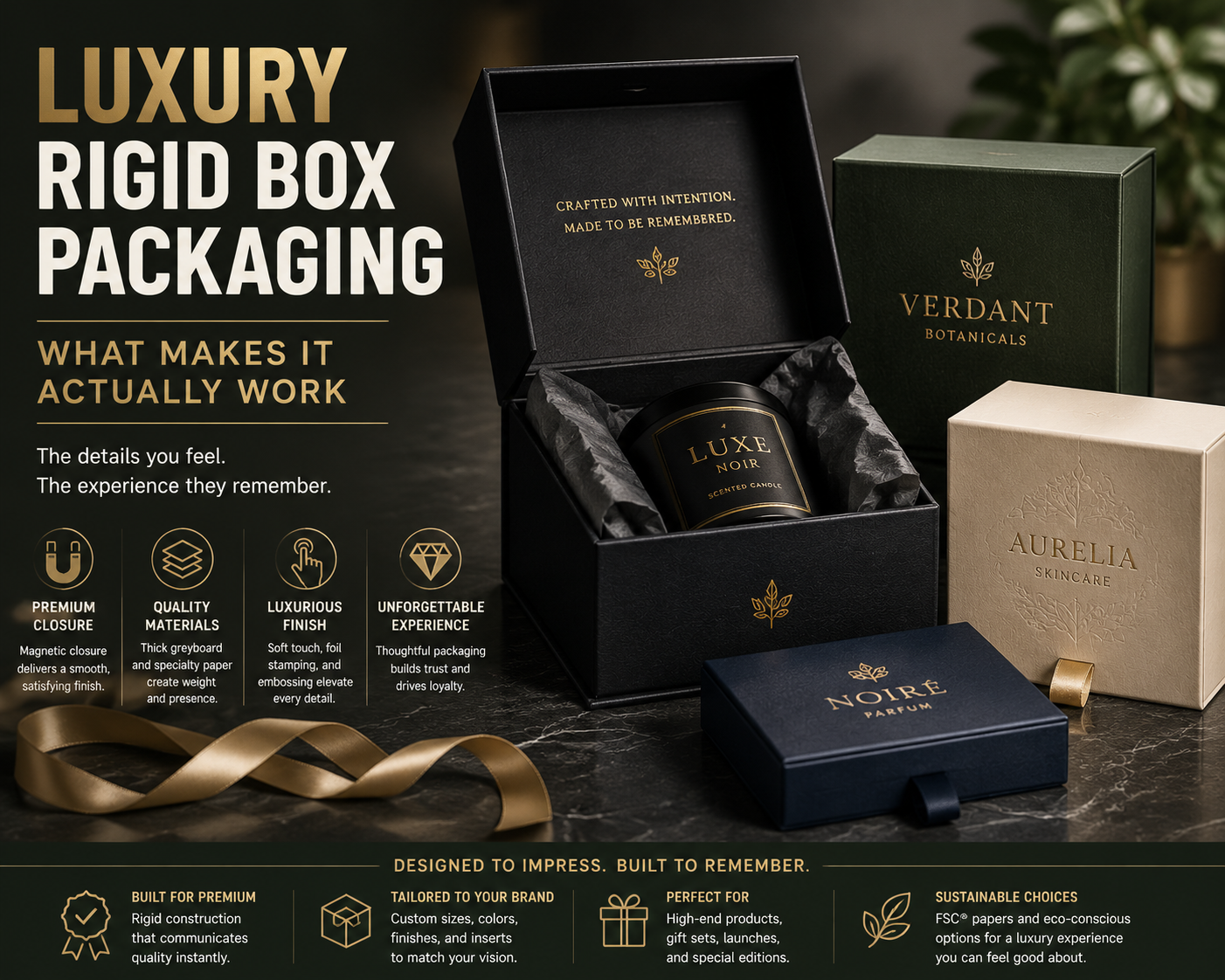
The closure. Magnetic closures are the single most powerful premium signal in a rigid box. Not the foil. Not the ribbon pull. The close. A magnet-assisted lid creates a smooth, controlled seat that communicates engineering and intention. Buyers register this immediately. It’s the same mechanism behind reclosable formats like magnetic craft boxes, where the closure also needs to survive being opened and shut repeatedly rather than just once at unboxing. Ribbon pull tabs are secondary — they add a tactile interaction at the opening moment. Friction-fit lids without magnets can still feel premium if the tolerance is tight. Loose, sloppy lids undercut everything else.
Board weight. A 2mm greyboard box feels adequate. A 3mm greyboard box feels substantial. That extra millimeter is noticeable in hand. For products at $80+ price points, it’s worth specifying. The weight difference per unit is small. The perceived quality difference isn’t.
Outer wrap paper. The paper wrapped over the greyboard determines much of the tactile and visual experience. Textured papers — linen, felt, pearlescent — signal premium before any print is applied. A smooth coated paper allows sharper print but feels more commercial. The paper spec is the decision that most influences whether a box reads as “luxury” or merely “nice.”
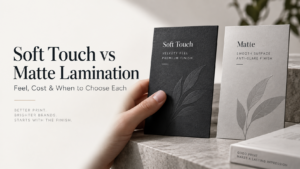
Finish. Soft-touch lamination on the outer wrap is the most commonly specified premium finish for rigid boxes. It reduces gloss, adds a tactile matte feel, and makes the box feel expensive before you read a single word. Foil stamping and spot UV are the visual premium signals — they catch light and create contrast. Embossing and debossing add dimensional texture to logos or patterns.
Print comes last. Research by the Institute of Packaging Professionals consistently shows that material and structural decisions drive perceived quality more than print quality in the premium segment. A beautifully printed box on thin board feels cheaper than a plainly printed box on heavy board.
What Luxury Rigid Box Packaging Costs — And When the Math Works
A well-specified luxury rigid box — 2.5mm greyboard, soft-touch outer wrap, magnetic closure, spot foil — runs roughly $3–8 per unit at 500-unit MOQs. At 1,000+ units, the range drops to $2.50–6. Box dimensions, closure type, and interior finishing change the cost significantly. For standard rigid box footprints by product type, the box size guide covers common size ranges.
Compare that to a premium folding carton at the same volume: $0.40–1.50 per unit. Rigid boxes cost roughly 4–6x more.
That premium earns back in specific situations:
High-ticket products. Jewelry, premium cosmetics, spirits, electronics accessories, luxury gifts. When the product sells for $60+, the packaging cost is a small percentage of the transaction. The box contributes to the buyer’s certainty that the price was worth it.
Gift purchases. A significant portion of rigid box sales happen in gift contexts. The buyer needs the box to communicate value on their behalf. A rigid box does that job. A folding carton often doesn’t.
Branded retail environments. In a prestige retail setting — a boutique, a department store, a brand flagship — the packaging is on display before the purchase happens. Luxury rigid box packaging on a shelf communicates at a different register than a folding carton.
Subscription or repeat-purchase products. Research on how packaging drives repeat purchases shows that premium unboxing creates a brand memory that influences the next decision. For products with high repeat purchase value, the per-unit packaging investment has a longer return window than a single transaction.
I’ve seen brands spend $8 per unit on luxury rigid boxes for products they sell for $30. That math works only if the box is part of why the customer paid that price. In some categories it is. In most, it isn’t. Be honest about whether your customer is buying a premium experience or a commodity product in expensive packaging.
Finishes Explained: What Each One Actually Does
Soft-touch lamination. Applied to the outer wrap. Creates a matte, velvety surface that reduces fingerprints and gloss. Feels expensive. Works on almost any color. The most versatile premium finish — and typically the first one to specify.
Foil stamping. A metallic or pigmented foil applied under heat and pressure to specific design elements. Gold, silver, rose gold, matte black. Catches light. Creates contrast against matte backgrounds. Strong for logos and type. Overdone on full-panel applications — use it as an accent, not a background.
Spot UV coating. A high-gloss UV-cured coating applied to specific design areas over a matte laminate base. Creates contrast between matte and gloss surfaces. Subtle in low light, dramatic under direct light. Works especially well on patterns and brand marks.
Embossing and debossing. Pressing the board to create raised or recessed texture. Used primarily on logos and brand marks. Adds dimension without ink. A debossed logo on soft-touch board is one of the strongest, most understated premium signals available.
Interior finishing. Often underspecified. A velvet flocked interior, a custom foam insert, or a color-matched paper tray transforms the unboxing moment. An unfinished brown chipboard interior in a premium box undermines everything on the outside. Always spec the interior as part of the design — not as an afterthought.
What Brands Get Wrong About Luxury Rigid Box Packaging
Spending on print, not materials. A beautifully designed box on thin greyboard with a loose lid doesn’t feel premium. Material and closure decisions come first. Print budget follows.
Ignoring tolerance on the closure. A lid that fits too loosely reads as cheap. A lid that requires force to open is frustrating. Rigid box lid tolerance is a spec decision. Request samples with your actual product inside. Testing fit is one of the packaging mistakes that cost brands most when skipped.
Overfinishing. Full-coverage foil. Spot UV everywhere. Embossing on every panel. It reads as trying too hard. The most effective luxury rigid boxes are restrained. They do one or two finish decisions very well. Premium is confidence, not complexity.
Not specifying the interior. The interior presentation is the actual product experience. The exterior sells the box. The interior delivers on the promise. A great exterior with a thoughtless interior is the packaging equivalent of a beautiful facade on an empty room.
Choosing rigid boxes when a folding carton would do the same job. For a full breakdown of when each format is right, the rigid boxes vs. folding cartons guide covers the decision in detail. Sometimes a well-executed folding carton with premium finishes outperforms a rigid box at a third of the cost. For outer shipping cartons protecting rigid boxes in transit, the corrugated flute types guide covers which wall construction handles your product weight.
Five Specs to Confirm Before Ordering
1. Board weight. 2mm, 2.5mm, or 3mm greyboard. Heavier feels more premium. Heavier also costs more and weighs more in shipping.
2. Closure type. Magnetic, ribbon pull, friction-fit. Confirm magnet placement and pull strength on the physical sample.
3. Outer wrap paper. Request paper samples before committing. Textured versus smooth versus cloth wraps feel completely different.
4. Interior spec. Velvet flocking, paper-wrapped tray, foam insert, or plain chipboard. Don’t leave this blank.
5. Lid tolerance. Test the lid with your actual product inside. The sample without product will behave differently than one with product affecting fit.
Pricing and MOQs vary by specification. Request a custom quote for accurate details.
FAQ
What is luxury rigid box packaging?
Rigid box packaging is built from thick greyboard panels assembled into a fixed, non-collapsible structure. The greyboard is wrapped in specialty paper and typically finished with soft-touch lamination, foil, embossing, or similar treatments. It’s used for high-value products where the unboxing experience is part of the brand proposition.
How much does luxury rigid box packaging cost?
At 500-unit MOQs, well-specified rigid boxes typically run $3–8 per unit depending on board weight, closure type, interior finishing, and dimensions. At 1,000+ units, cost usually drops to $2.50–6. These are significantly higher than folding cartons, which run $0.40–1.50 at similar volumes.
What is the difference between a rigid box and a folding carton?
A folding carton is made from a single sheet of board, scored and folded flat. A rigid box is assembled from multiple greyboard panels, cannot fold flat, and ships as a finished structure. Rigid boxes feel substantially more premium due to weight and construction. They also cost substantially more to produce and ship.
What finishes make a rigid box look premium?
Soft-touch lamination on the outer wrap is the most versatile premium finish. Foil stamping adds metallic contrast. Spot UV creates gloss-on-matte contrast. Embossing or debossing adds dimension to brand marks. Use one or two of these selectively — restraint reads more premium than combining all of them.
Can rigid boxes be eco-friendly?
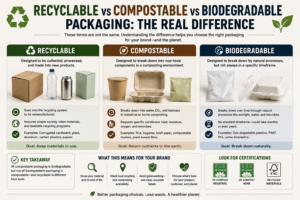
Yes. The greyboard core is paper-based and recyclable. Specify FSC-certified board. Avoid plastic-based coatings and mixed-material laminations that complicate recycling. Velvet flocking is typically synthetic — if sustainability matters, specify paper-based interior finishing instead. For a full breakdown of eco-friendly packaging decisions and what each certification actually costs, the eco-friendly packaging guide covers the tradeoffs across materials.
What products are best suited for luxury rigid box packaging?
Jewelry, premium cosmetics, spirits, luxury gifts, electronics accessories, and subscription products with high repeat purchase value. Products selling for $60 or more where the packaging experience contributes to perceived value. Products bought frequently as gifts. Below $30 with a price-sensitive buyer, a premium folding carton is usually the more honest choice.
Luxury rigid box packaging is a specific set of material and structural decisions. It isn’t about budget. Brands that understand the hierarchy — closure first, board weight second, wrap paper third, finish last — get premium results at rational costs. Brands that spend the budget on print and skip the closure spec end up with an expensive box that doesn’t feel expensive. The lid close is the moment. Get that right, and everything else follows.