
If you’re sourcing custom boxes in Michigan — whether you’re in Detroit, Ann Arbor, or Grand Rapids — the packaging decisions that actually matter aren’t the ones you’d expect. They’re not about what looks good in a mockup. They’re about what survives a January delivery truck, what holds up in a warehouse on a humid August afternoon, and what makes a customer in Ann Arbor feel like the brand actually knew them.
I’ve worked with brands across Michigan for years. The state has a personality that most generic packaging advice misses entirely. Michigan isn’t Chicago. It isn’t Ohio. The climate, the industries, the regional pride — all of it changes what you should actually be ordering.
Here’s what I wish more Michigan brands knew before placing their first box order.
Why Michigan’s Climate Changes Your Box Specs
Michigan has one of the widest weather swings of any state in the Midwest. Detroit summers regularly hit 90°F with humidity above 75%. Winters mean sustained temperatures well below freezing and heavy precipitation. That range does something most brands don’t plan for: it changes how corrugated performs in the real world.
Humidity is the bigger threat. Research published in Applied Sciences confirms that ECT (edge crush test) strength — the measure of how much weight a box can bear when stacked — is among the most humidity-sensitive properties in corrugated board. At 85% relative humidity, a corrugated box can lose up to 50% of its rated stacking strength. Detroit and Ann Arbor routinely see summer humidity at 75–80%, which puts Michigan brands in a real risk zone during peak shipping season.
The result: boxes that pass your spec sheet in winter can buckle or delaminate in a summer warehouse. If your product ships through June, July, or August, spec for summer conditions — not the controlled environment where the box was tested.
Cold winters create a different issue. Temperature cycling — cold delivery trucks, warm loading docks, cold storage again — causes condensation at the seams and joints of corrugated boxes. That moisture introduces weak points exactly where you need the box to be strongest. For products shipping November through March, ask your supplier about moisture-resistant corrugated liner. Clay-coated or treated liners cost more, but the difference between a box that arrives intact and one that collapses at a retail partner is not an argument you want to have.
Two practical rules for Michigan brands:
- Summer shipping (May–September): Use double-wall corrugated for anything being stacked in storage, or spec a heavier ECT than the standard recommendation. If your product is in a 32 ECT box, consider 44 ECT during peak humidity months.
- Winter shipping (November–March): Moisture-resistant liner. Don’t skip it if your product arrives at a retail partner or 3PL that doesn’t control humidity.
Detroit: The Precision Standard
Detroit’s industrial DNA runs deep, and it shows in how brands here approach packaging decisions. Brands based in Detroit — even those selling candles or skincare, not car parts — tend to bring a spec-driven, precision-focused mentality to their supplier relationships. That’s a useful instinct.
Detroit-based buyers typically want:
- Exact tolerances for insert fits (not “approximately 5mm of clearance”)
- ECT or Mullen burst ratings stated in writing, not implied
- Physical production samples before committing to a full run
- Clear lead times in business days, not vague estimates
If a packaging supplier won’t give you printed specs or a test sample before a full production order, that’s a red flag by any standard — and Detroit brands tend to catch it faster than most.
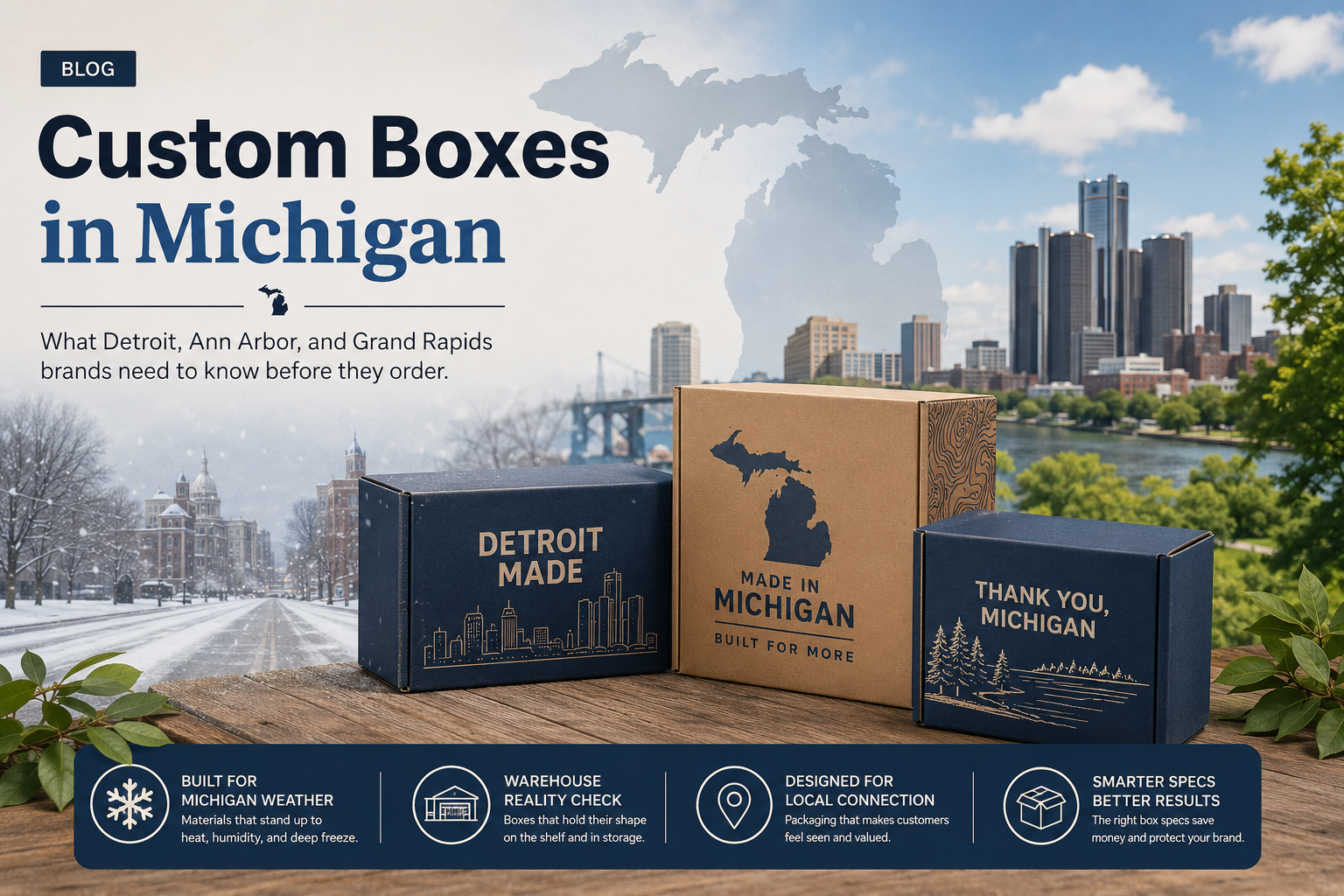
The other piece of Detroit’s packaging culture is the “Made in Detroit” commercial signal. Michigan consumers — especially in the metro area — respond strongly to local brand identity. Brands that print “Crafted in Detroit” or “Made in Michigan” on the exterior or interior of their packaging report stronger conversion at local farmers markets, boutique retail, and pop-up events. It isn’t just aesthetics. It tells a customer something real about where the product came from.
I’ve seen brands add a single one-color print to the inside of their lid — “Made in Detroit with care” — and watch their repeat purchase rate climb at local wholesale accounts. The box becomes part of the story. That’s not marketing copy; it’s a sourcing decision.
Ann Arbor: DTC-First, Small Runs, Move Fast
Ann Arbor operates at a different pace and with different priorities. The University of Michigan ecosystem creates a constant pipeline of consumer brands — food startups, wellness companies, student-launched DTC products — that need packaging quickly, in small quantities, without a six-month supplier relationship first.
What Ann Arbor brands typically need:
- Low minimum order quantities — 50 to 300 units for a product launch or pilot run
- Digital printing — full-color branding without the plate cost of offset runs
- Speed — products launching at local markets or on Shopify can’t wait 10 weeks
- Mailer box formats — most Ann Arbor DTC brands ship direct to consumer, so custom mailer boxes are more relevant than retail shelf packaging
If you’re an Ann Arbor brand launching your first product, don’t spec corrugated shipping cases like a consumer goods company going into Target. Start with a single-wall corrugated mailer or a folding carton, get your run size right, and invest in exterior branding before you invest in structural complexity.
For subscription brands — and there are many in the Ann Arbor startup community — a branded mailer with tissue paper and a printed card will outperform a plain brown box with a sticker almost every time. The cost difference per unit is smaller than most brands expect.
Grand Rapids: Design-First, and They’ll Notice If You Cut Corners
Grand Rapids is the furniture and design capital of the Midwest. Steelcase, Herman Miller, and dozens of smaller design firms have built a city-wide aesthetic standard that’s higher than most. Brands based there — even outside the furniture industry — have unusually demanding customers because the city has calibrated what “good” looks like.
What Grand Rapids brands tend to prioritize:
- Finishing quality — matte lamination, soft-touch coatings, clean ink registration across runs
- Structural consistency — every box in every batch should look the same
- Premium unboxing — ribbon pulls, foil stamping on lids, tissue paper that fits the product
If you’re a Grand Rapids brand selling at local boutiques or shipping to design-conscious consumers, the exterior print quality on your box will be evaluated. Not harshly, but honestly. Packaging that looks like it was designed by someone who cared tends to sell better in that market.
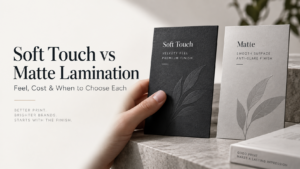
One underused option Grand Rapids brands should consider: soft-touch matte lamination on paperboard. It adds a tactile quality that’s immediately noticeable — customers comment on it — and the cost premium over standard gloss lamination is modest at scale.
Michigan’s Craft Brewing Scene Has Packaging Needs Worth Knowing
Michigan has more than 400 craft breweries — among the highest concentrations in the country. That’s created an entire secondary packaging market in the state: merchandise mailers, subscription club boxes, branded carriers, and taproom retail packaging.
Craft breweries shipping merchandise or running monthly clubs need:
- Custom corrugated mailers for branded merchandise drops
- Insert-ready boxes with foam or molded pulp for fragile items
- Kraft-look printing for brands going for a natural, handcrafted aesthetic
- Branded outer shipper boxes for subscription club fulfillment
If you run a Michigan brewery and your subscription boxes are shipping in plain brown corrugated with a printed card inside, this is one of the faster brand upgrades available to you. Brewery subscription customers are loyal, vocal, and post their boxes online. Plain packaging is a missed opportunity.
What to Sort Out Before You Order
A few decisions that will save you from the most common mistakes:
Quantity and print method: Under 500 units, digital printing makes the most sense — lower setup cost, faster turnaround, full color without plate fees. Over 2,000 units, offset printing wins on unit cost and color consistency. The quality gap between the two is real but narrowing; for most DTC brands, digital at 200–500 units is the right starting point.
Timeline: Allow 3–4 weeks from artwork approval to delivery in Michigan. Production typically runs 2–3 weeks; shipping to the Midwest from major suppliers adds 4–7 days. If you’re launching for a specific event, back-plan from there — not from the date you want to order.
Samples: Always get a physical, folded, glued sample before approving a full run. Color on screen looks different from ink on corrugated or paperboard. This adds a week but prevents reprints that cost far more.
Interior printing: The inside of your box costs a fraction of the exterior and creates the unboxing moment. For Michigan brands selling at local events or shipping DTC, a printed interior — “Shipped from Detroit” or “Packed in Michigan” — is a detail customers remember and share. The brands that understand how packaging drives repeat purchases don’t leave this touchpoint blank.
Before committing to a full run, it’s worth going through the common packaging mistakes that cost brands real money — most of them are straightforward to avoid once you know what to look for.
How to Actually Source Custom Boxes in Michigan
Most Michigan brands start by searching for a local supplier and discover quickly that local print shops handle labels and flat print — but not structural custom boxes with ECT specs, inserts, and full-color printing. Michigan Box Company has operated in Detroit since 1927 and handles corrugated at scale for industrial applications, but most branded custom packaging for DTC and retail brands comes from suppliers with digital and offset capabilities.
Custom boxes at quality scale come from national suppliers with packaging-specific manufacturing. That’s not a disadvantage for Michigan brands — lead times are comparable, shipping to the Midwest is competitive, and you’re not limited by what a local shop can produce.
Easy Box Packaging works with brands across Michigan — from Ann Arbor DTC startups needing 100-unit digital runs to Detroit brands ordering 5,000+ units with offset printing and custom inserts. We do structural prototyping, physical samples, and help you nail the spec before you commit to production. If you’re exploring ecommerce packaging options, we can match material and print method to your volume and shipping conditions.
If you’re comparing quotes, make sure you’re comparing the same specs. A 200-unit digital run at $2.80 per box and a 500-unit run at $1.90 per box aren’t the same product if the wall thickness or liner weight differs.
For brands already dealing with nearby markets, our guides for custom boxes in Chicago and custom packaging in Ohio cover similar regional considerations worth reading alongside this one. And if you want to understand where packaging budget actually matters — and where you can trim — the custom packaging budget guide breaks it down by brand stage.
FAQ: Custom Boxes Michigan Detroit
How long does it take to get custom boxes delivered to Michigan?
Figure 3–4 weeks from artwork approval to arrival. Production runs 2–3 weeks; shipping to Michigan from most suppliers adds 4–7 business days. Build in a buffer if you’re launching for a specific event or retail deadline.
What’s the minimum order quantity for custom boxes in Michigan?
Digital printing can go as low as 50–100 units. Offset printing typically starts at 500–1,000 units. For early-stage Michigan brands, start with digital and switch to offset once volume justifies the lower per-unit cost.
Does Michigan’s weather actually affect corrugated box quality?
Yes, especially in summer. High humidity — common in Michigan July and August — can significantly reduce corrugated stacking strength. Research shows boxes at 85% relative humidity can lose up to 50% of their rated strength. If your product is stacked in storage or shipping through summer, spec double-wall corrugated or use a moisture-resistant liner.
Can I get “Made in Michigan” or “Detroit-Made” printed on my box?
Yes. You can print any messaging on the exterior or interior. Brands working with Michigan retail accounts and farmers markets have used this consistently as a conversion signal. It costs nothing extra if the printing is already in your spec.
What’s the best box type for Ann Arbor DTC brands?
For most DTC brands shipping direct-to-consumer in small quantities, a single-wall corrugated mailer box with full-color digital printing is the right starting point. It’s protective, brandable, and available at low MOQ. Add tissue paper and a card inside and you have a real unboxing moment without the cost of a rigid box.
Are there local custom box suppliers in Michigan?
Yes — Michigan Box Company has been in Detroit since 1927 and handles industrial corrugated at scale. For full-color branded custom packaging with low minimums and digital printing, most Michigan brands use national suppliers who ship competitively to the state.
The Michigan Packaging Takeaway
The regional split matters. Detroit brands bring precision expectations — spec it right and get samples first. Ann Arbor brands need speed and small-run flexibility. Grand Rapids brands will notice finish quality, so don’t cut corners on lamination or print registration.
The climate factor is universal across all three markets: Michigan summers are genuinely hard on corrugated. Humidity is the biggest box killer in the state, and it’s the one most brands ignore until a pallet collapses in a warehouse.
And if your brand has a Michigan story — put it on the box. “Made in Detroit” or “Crafted in Michigan” isn’t a tagline. For a growing number of Michigan consumers, it’s a reason to buy.